Reports by the Department of Energy and the Defense Nuclear Facilities Safety Board (DNFSB) Reveal Near-Disastrous Worker Incident while Hydo-Blasting with a Robot through a Thick Concrete Wall at the MOX-to-Pit-Plant Project with a High Pressure Water Jet
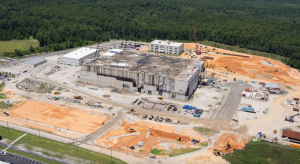
The dodgy legacy grows of the SRS once-was-MOX plant and now Wanna-be Plutonium Bomb Plant, with only $20 billion to go with construction. Operation date to produce plutonium “pits” for new nuclear warheads looks to be 2035 or later, it seems, if they can hydroblast enough walls to get necessary layout changes and room access. Note wall on south side that appears to be detached – that’s the Gabion wall mentioned in the January 2026 incident reports below, designed to slow down missile aimed at the facility (to try and steal plutonium by blasting a hole into the facility perhaps). The MOX plant has about 500 rooms in it, all with thick concrete walls, thus making conversion to the SRS Plutonium Bomb Plant a challenge due to the number of through-wall cuts required.
“This near-disastrous incident reveals not only the risks facing workers in converting the abandoned MOX plutonium into the Plutonium Bomb Plant – a cornerstone of DOE’s involvement in a nuclear arms race – but also reveals poor, unacceptable planning in carrying out the unnecessary conversion mission. As much more hydroblasting of thick concrete walls will take place if this much-delayed and far over-budget project continues, we can expect more problems to emerge with this challenging effort to rearrange by force the layout of the MOX building.” — Tom Clements, Director, SRS Watch
Reports on worker risks by “hydroblasting” through an external wall:
Occurrence Report Number: NA-SR-SRSO-SRNS-FGENNA-2026-0001
5. Secretarial Office: NA – National Nuclear Security Administration 6. System, Bldg., or Equipment: 226-F
Initial investigation discovered that the hydro demolition robot had penetrated through the south face of the south exterior wall of 226-F through a pre-existing drilled or casted hole that’s internal termination had been exposed through the hydrolazing process, allowing the water jet to continue through the wall without cutting through the remaining concrete thickness. Upon further investigation, it was discovered that no controls were in place to stop employees from entering the restricted area or to warn them of the hydrolazing activities that were taking place on the opposite side of the wall. The employees were not in the direct line of fire of the piercing water jet at the time of expulsion; however, it was disclosed during the interviews with the employees that approximately 2 minutes prior to the expulsion, the employees were directly in front of the spot that the water jet exited the wall. The employees were verifying the penetration layout on the south face of the Gabion wall. This penetration is directly inline to the one being hydrolazed at the time of the incident, potentially putting the employees in the direct line of fire had the water jet penetrated though at the time the employees were working in the immediate area. The employees at the time of the expulsion were approximately 16 feet west and 20 feet below the penetration being hydrolazed, removing them from the imminent direct line of fire at the time of the incident.
31. HQ Summary: On January 12, 2026, carpenters entered the annulus on the south side of 226-F and climbed up a scaffold to validate layout dimensions on penetration A208-14. The carpenters descended the scaffold ladder and were waiting to exit the annulus while Ironworkers completed an overhead lift with a crane. The hydro demolition robot began cutting concrete on penetration A208-22 at about 20,000 pounds per square inch. The carpenters in the annulus witnessed the water jet expelled from the south face of the exterior wall and the operator general foreman shut down the hydro demolition robot. The hydro demolition robot had penetrated through the south face of the south exterior wall through a pre-existing drilled hole that’s internal termination had been exposed through the hydrolazing process, allowing the water jet to continue through the wall. No controls were in place to stop employees from entering the restricted area or to warn them of the hydrolazing activities on the opposite side of the wall. The employees were not in the direct line of fire of the piercing water jet at the time of expulsion; however, about two minutes prior to the expulsion, the employees were directly in front of the spot that the water jet exited the wall. The employees at the time of the expulsion were approximately 16 feet west and 20 feet below the penetration being hydrolazed, removing them from the imminent direct line of fire at the time of the incident.
January 30, 2026
TO: Technical Director
FROM: Savannah River Site Resident Inspectors
SRPPF process building at the same time hydrolazing began. The carpenters noticed the water jet
penetrating the wall into their area, and the carpenter general foreman notified the hydrolazing
general foreman that a water jet was penetrating the wall. The operations general superintendent
suspended hydrolazing activities, and the hydrolazing subcontractor (AECON) management
walked down the area and determined that there were no barricades or signage in place to
prohibit employees from entering the restricted area while hydrolazing activities on the other
side of the wall took place. During the investigation, AECON management determined that the
carpenters were not in the direct line of fire of the water jet at the time of expulsion; however,
they had been in the line of fire of the water jet minutes before. Additionally, AECON
management determined that other hydrolazing work areas lacked the necessary controls
required to keep personnel from inadvertently entering restricted areas. At the outbrief, AECON
personnel discussed corrective actions that had been implemented, which included revision of
procedures to improve barricade practices, improved job hazard analyses, and additional
hydrolaze refresher training for all hydrolaze operators and general labor personnel.
Additionally, AECON management held a comprehensive pre-job brief with the entire workforce
prior to resuming hydrolazing activities. The resident inspector noted that increased
communications between the various work groups regarding hazardous energy activities could
provide personnel additional awareness to avoid restricted areas when planning work activities.